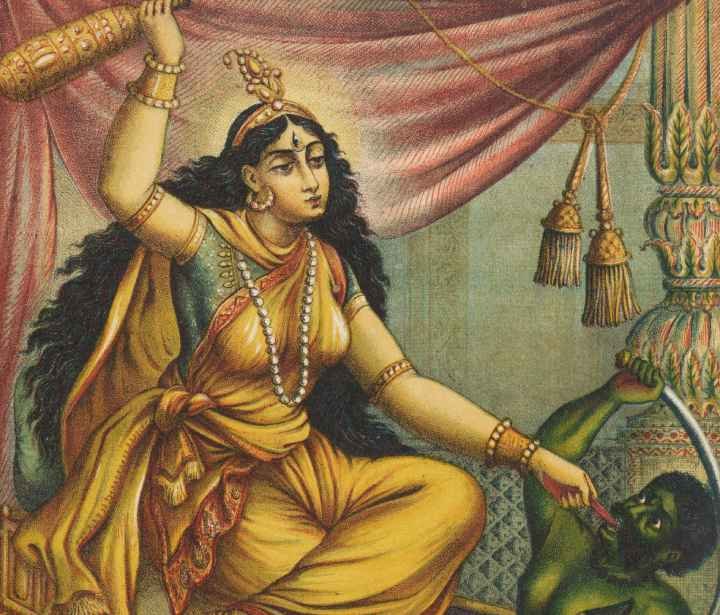
Revered for their Stambhana Shakti, the Bagalamukhi Mantras are a powerful means of worship for protection against enemies and for inviting auspiciousness.
Dedicated to Maa Bagalamukhi, eight of the ten mahavidyas, these Mantras are known for the power to paralyse or immobilise the actions of the evil.
For thousands of years, devotees had practised these mantras to overcome enemies, false accusations, black magic, and to seek protection and reclaim rightful ownership.
Bagalamukhi Mantra Sadhana is a distinctive practice, as it is believed to generate divine transformative energy that connects with the power of Goddess Bagala.
Alongside Mantras, there are other ways of worship, such as chanting Bagalamukhi slokas and stotras, reciting the Bagalamukhi Gayatri, performing puja and homa.
Bagalamukhi Mantra for Protection against Enemies
ॐ ह्लीं बगलामुखि सर्वदुष्टानां वाचं मुखं पदं स्तम्भय जिह्वां कीलय बुद्धिं विनाशय ह्लीं ॐ स्वाहा
Oṃ Hlīṃ Bagalāmukhi Sarvaduṣṭānāṃ Vācaṃ Mukhaṃ Padaṃ Stambhaya Jihvāṃ Kīlaya Buddhiṃ Vināśaya Hlīṃ Oṃ Svāhā
I invoke the Goddess Bagalamukhi with the Hlim Bija (which represents the power to paralyse or stop one’s actions). O Devi, Paralyse the speech, face, and moment of the wicked being. Pierce their tongue and destroy their intellect. Om, please accept my offerings.
Bagalamukhi Brahmastra Mantra
ॐ ह्रौं ऐं श्रीं क्लीं श्री बगलामुखिने मम रिपून् नाशय नाशय ममैश्वर्याणि देहि देहि शीघ्रं मनोवाञ्छितं साधय साधय ह्रीं स्वाहा
Oṃ Hrauṃ Aiṃ Śrīṃ Klīṃ Śrī Bagalāmukhine Mama Ripūn Nāśaya Nāśaya Mamaiśvaryāṇi Dehi Dehi Śīghraṃ Mano-Vāñchitaṃ Sādhaya Sādhaya Hrīṃ Svāhā
With the seed syllables Hraum, Aim, Srim, and Klim, which represent protection, speech, prosperity, and desire, I invoke the divine Goddess Sri Bagalamukhi. I invoke her to destroy and nullify my enemies, grant me wealth quickly in abundance, and the desires in my mind may get fulfilled and accomplished. O, the one associated with Hrim Bija’s divine energy. Please accept my offerings.
Navakshara Mantra
ह्रीं क्लीं ह्रीं बगलामुखि ठः
Hrīṃ Klīṃ Hrīṃ Bagalāmukhi Ṭhaḥ
O Goddess Bagalamukhi, the embodiment of Hrim and Klim Bijas, may the energy of the devi subdue and immobilise the negative forces.
Other Bagalamukhi Mantras
ॐ ह्लीं बगलामुखी देव्यै नमः
Oṃ Hlīṃ Bagalāmukhī Devyai Namaḥ
Salutations to Goddess Bagalamukhi, the embodiment of Hlim Bija.
ॐ ह्लीं ॐ
Oṃ Hlīṃ Oṃ
Om, May the power of Hlim Bija be invoked.
ॐ श्री बगलामुखी देव्यै नमः
Oṃ Śrī Bagalāmukhī Devyai Namaḥ
Salutations to Goddess Bagalamukhi Devi.
Mantra Sadhana and Japa Details for Bagalamukhi Mantras
For Mantra siddhi, the recommended Japa count is 1,25,000 times (0.125 million).
As with other mantras, this practice should include reciting Saptangas, Dhyana, performing Nyasa, and other steps that are a must in Japa, like any other Mantra. Before beginning the Japa, one should visualise the form of Devi Bagalamukhi.
The number of daily repetitions used for Japa should remain the same throughout the Sadhana period and chanted at the same time each day.
Practitioners should complete the full japa count within a specified period, such as a mandala or a paksha.
For the practice of Japa, the practitioner should prepare the pedestal asana, sit in Padmasana facing east, and must also observe strict celibacy.
The Sadhana also involves the Bagalamukhi Yantra and its worship.
Yellow holds special importance in this practice, as several aspects of the Goddess are associated with this colour.
Yellow garments and a Japamala made of yellow items, such as turmeric seeds or yellow gemstones, must be used. If such a rosary is difficult to obtain, a Rudraksha mala can also be used instead.
After completing the full japa count, the practitioner should perform Dasamsa Homa with yellow flowers. They should also carry out Marjana, Tarpana, and the other required ritual steps to achieve full mastery of the Bagalamukhi Mantra.
In general, practitioners should perform Mantra Sadhana after receiving initiation from a competent Guru. If not possible, they may visualise Lord Shiva as the Guru and follow an alternative approach.