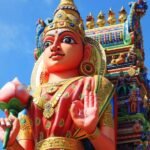
Among all the Tara Mantras, the Ekajati Tara Mantra has a profound place due to its protective and bestowing nature.
Ekajati or Ekajata is the fierce form of Goddess Tara and is also called by the names Ugra Tara, Mahogra Tara, and Tarini. Tara and her forms are one among the Mahavidyas and have a great spiritual significance in both Hinduism and Buddhism.
Chanting this Ekajati Tara Mantra brings success and victory at all times, and by continuing the mantra sadhana, the practitioner gets liberated from the cycle of birth and rebirth.
Just like Tara Mantras it gives protection and also brings riches to the practitioner and bestows him with excellent poetic skills and mastery over all the shastras.
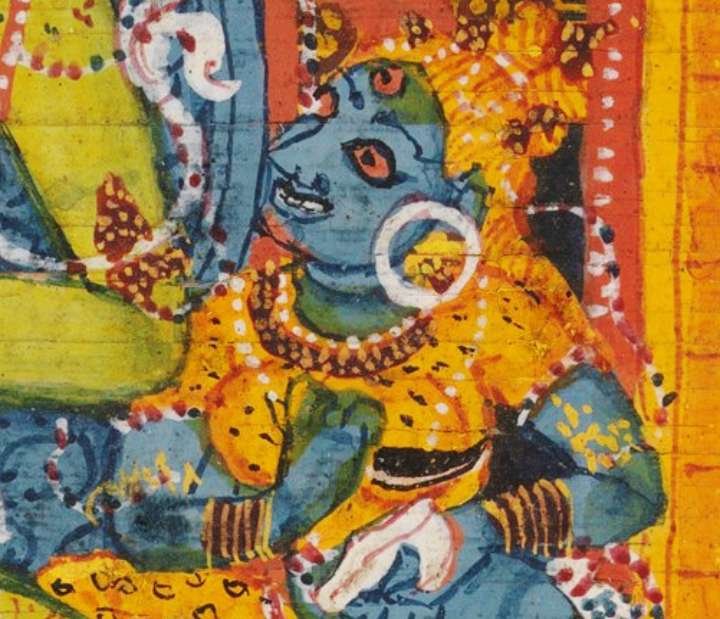
Ekajati Tara Mantra – Moola Mantra
ह्रीं त्रीं हुं फट्॥
Hrīṁ Trīṁ Huṁ Phaṭ॥
Meaning: O Goddess Ekajata, I invoke you, reciting the seed syllables Hrim, Trim, and Hum of your Mantra, which represent the energy of illusion or Maya, divine power, and the power to remove obstacles and negativity. Please nullify the negative influences and obstacles in my path.
Note: There is a small story linked with sage Vasistha that mentions the replacement of Trim-Bija to Strim-Bija. These details are present in a few scriptures like Tararnava and Ekavirakalp. But several practitioners and scriptures have differed on the use of Strim Bija.
If phat is removed from the above mantra, it is called the Tara Kalluka Mantra (Tryakshara Vidya) or Maha Neela Saraswati Mantra.
Another Ekajati Tara Mantra (from Mantra Maharnava)
ॐ ह्रीं नमो भगवत्येकजटे वज्रपुष्पं प्रतीच्छ स्वाहा॥
Oṃ Hrīṃ Namo Bhagavatye-Ekajaṭe Vajra-Puṣpaṃ Pratīccha Svāhā॥
Meaning: Om, Reciting the Hrim Bija, I bow to the supreme Goddess Ekataja. Accept this Vajra shaped Dill flowers. May this offering be accepted.
Ekajati Tara Sadhana
After completing the morning routines, the sadhaka should enter the puja space and perform the Achamana. Then, they must visualise the Tara Devi as if present beneath a Kalpa Vriksha, the wish-fulfilling tree, and seated on a Mani Pitha adorned with precious gemstones.
The visualisation of the Devi and the method of Yantra Puja vary according to the chosen tradition, such as Dakshinachara or Vamachara. For example, in the tantric tradition, the Sadhaka envisions the Devi seated in a meditative posture beneath a Kalpa Vriksha in a cremation ground, wearing a garland of skulls and surrounded by goblins and so on.
The process will be different based on the selected Path. It is highly recommended to seek guidance from an eligible Guru for this Sadhana unless the sadhaka knows the complete Sadhana Krama and the proceedings.
Next, the practitioner must prepare the asana. In general practices, any sacred material, such as silk, cotton, or kusha grass can be used for preparing the Asana.
One must perform the prayer to that Asana, get seated and then perform the Yantra puja. One can either draw the yantra according to the guru’s instructions or use a pre-drawn yantra that has undergone the prescribed samskaras.
Then perform the Bhuthasuddhi, followed by the Tara Dhyana, visualising the Devi’s aspects as per the Tara Shlokas.
Practioner then must perform the Pranayama using the moola mantra.
After the pranayama, the practitioner must recite the viniyoga and perform Anganyasa, Karanyasa, and Hrudayadi Nyasas. Later with Tara Shodha Nyasa, which includes the six Nyasas: Rudra, Graha, Lokapala, Shiva-Shakti, Taradi, and Pitha Nyasas.
Thereafter, they must do the Gurupuja and Yogini Puja, followed by Tara Dhyanam and Mantra Japa.
After completing the total Mantra Japa, the practitioner must perform the Dasamsa homa with Tarapana, Abhisheka, and Bhojana rituals.
Japa Sankhya
According to the Mantra Shastra Granthas, the prescribed Japa Sankhya for the Ekajati Tara Mantra is 1 lakh (100,000) repetitions.