Known for their powerful ability to bestow sacred knowledge and protection, the Dakshinamurthy Mantras hold a special place in Hindu Shaivite tradition.
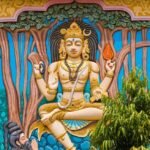
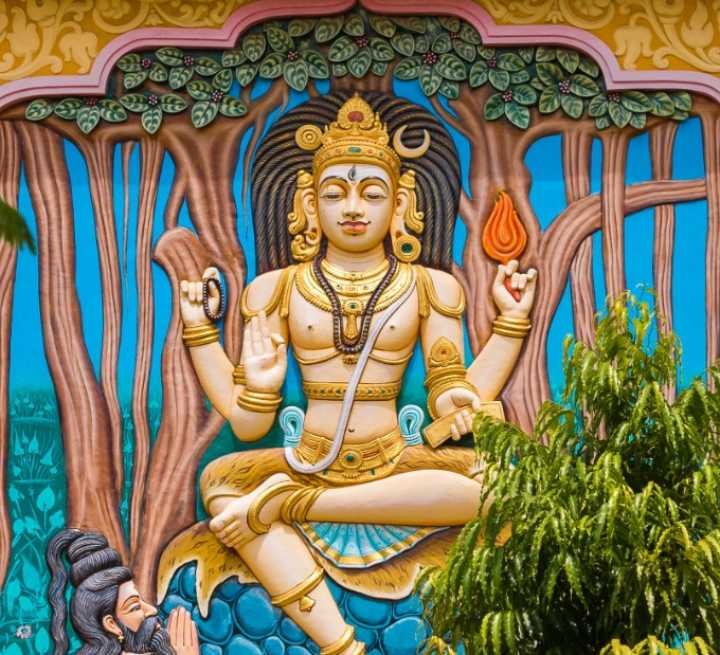
Lord Dakshinamurthy, one of the sacred forms of Lord Shiva, is worshipped as the Adi Guru of speech, music, wisdom, yoga, and meditation. Guru Sri Dakshinamurthy is usually seen under a banyan tree, facing south and flanked by a group of Saints seeking wisdom from the Lord.
Many Dakshinamurthy Mantras, especially the Mala Mantra, Moola Mantra and various Dakshinamurthy shlokas, describe these sacred attributes and the importance of this Lord.
Devotees chant the Dakshinamurthy Mantra and perform his mantra sadhana mainly to gain sacred knowledge, receive guidance, seek protection, and connect with the divine energy. Often, several devotees use this mantra during Meditation to deepen their focus and to develop inner stillness.
Medha Dakshinamurthy Mantra from Mantra Mahodadhi (Moola Mantra)
ॐ नमो भगवते दक्षिणामूर्तये मह्यं मेधां प्रज्ञां प्रयच्छ स्वाहा॥
Oṁ Namo Bhagavate Dakṣiṇāmūrtaye Mahyaṃ Medhāṃ Prajñāṃ Prayaccha Svāhā॥
My Salutations to the Supreme Lord Sri Dakshinamurthy. Please grant me the memory and wisdom. Please accept my offerings
2l/1008
Dakshinamurthy Mantra from Sharada Tilakam
ॐ ह्रीं दक्षिणामूर्तये तुभ्यं वटमूल निवासिने ध्यानैक निरताङ्गाय नमो रुद्राय शम्भवे ह्रीं ॐ ॥
Oṁ Hrīṁ Dakṣiṇāmūrtaye Tubhyaṁ Vaṭamūla Nivāsine Dhyānaika-niratāṅgāya Namo Rudrāya Śambhave Hrīṁ Oṁ॥
Reciting the Hrim Bija, I worship the Lord Dakshinamurthy, the one residing beneath the sacred banyan tree and whose divine form is absorbed in Meditation. I bow to the one who exists in the forms of Rudra (the fierce protector) and Shambhu (The auspicious one).
Dakshinamurthy Gayatri
तत्पुरुषाय विद्महे
विद्यावासाय धीमहि
तन्नो दक्षिणामूर्तिः प्रचोदयात् ॥
Tatpuruṣāya Vidmahe
Vidyāvāsāya Dhīmahi
Tanno Dakṣiṇāmūrtiḥ Pracodayāt ॥
We meditate upon the Supreme being, who is the abode of all the sacred knowledge. May that Lord Dakshinamurthy enlighten our intellect.
Dwayakshara Mantra for worshipping Lord Dakshinamurthy
हंसः॥
Haṁsaḥ॥
I invoke the energy of Lord Dakshinamurthy, reciting the two-lettered mantra Hamsah
Vageeswara Dakshinamurthy
ॐ ऐँ ह्रीँ सौः नमो वागीश्वराय दक्षिणामूर्तये स्वाहा ॥
Oṁ Aiṁ Hrīṁ Sauḥ Namo Vāgīśvarāya Dakṣiṇāmūrtaye Svāhā ॥
Through the power of the Aim bija that represents the power of speech and wisdom, the Hrim bija that represents Divine energy, and the Sauh bija that represents the energy of awakening consciousness. I bow to you, Lord Dakshinamurthy, in the form of Vageeshwara, the Lord of speech, voice, and divine knowledge. Please accept my offerings.
Simple Dakshinamurthy Mantras for Daily Worship
ॐ दक्षिणामूर्तये नमः॥
Oṁ Dakṣiṇāmūrtaye Namaḥ॥
Om, My salutations to Lord Dakshinamurthy
ॐ नमो भगवते दक्षिणामूर्तये ॥
Oṁ Namo Bhagavate Dakṣiṇāmūrtaye ॥
I bow with reverence to the supreme Lord Dakshinamurthy.
Benefits of Dakshinamurthy Mantras
Unlike several other mantras used for material prosperity, Dakshinamurthy Mantras are chanted for inner awakening, self-realisation, improving intellect, and enhancing vision.
They help devotees discriminate between things and fulfil their spiritual intentions.
This mantra blesses the devotees with Atma janan and helps lay the steps for Brahma Vidya by aligning the energy of the sadhaka with Shiva.
Regular worship using these mantras removes mental fog and activates critical thinking and thought-provoking processes.
Worship of Dakshinamurthy is also linked to the awakening of Kundalini Shakti, especially through the Vishuddha and Ajna Chakras.
Japa Sankhya
For mantra siddhi, the Medha Dakshinamurthy Mantra and the Vageeswara Dakshinamurthy Mantra are traditionally chanted 1 lakh times (0.1 million repetitions).
For the Dakshinamurthy Mantra from Sharada Tilakam, it is a 3.2 Lakh count (0.32 million). For the Dakshinamurthy Gayatri Mantra, the Japa Sankhya for mantra siddhi is 7 lakh repetitions, or 0.7 million chants.
Alternatively, practitioners may chant these Dakshinamurthy mantras 1008 times regularly until their wishes are fulfilled. For daily worship or regular devotional practice, chanting 16, 21, or 108 times is recommended.