Among the many chants dedicated to the divine forms of Shakthi, the Varahi Mantras stand out for their immense power and transformative energy.
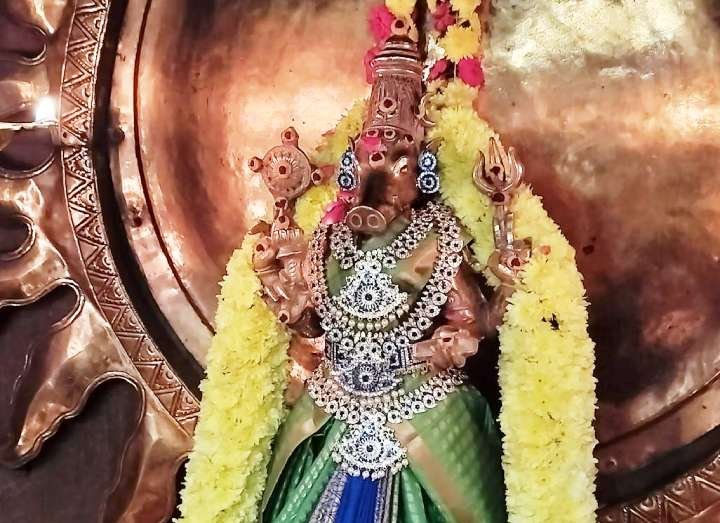
Goddess Varahi, the boar-faced mother Goddess, is worshipped as a fierce protector, the bestower of wishes, and the dispeller of evil influences.
This Goddess holds an important place across all three major traditions of Hinduism.
In Shaktism, devotees honour her as one of the Sapta Matrikas and as the commander of celestial forces in the court of Goddess Lalitha. In Shaivism, practitioners associate her with Goddess Varthali, Lalitha, and Unmatta Bhairavi. Whereas in Vaishnavism, followers associate her with Lord Varaha as his feminine form.
Varahi mantras help remove obstacles, provide protection, grant power, success, and guard devotees against negative forces. Practitioners use these mantras to meditate on the Goddess, invoke her presence, and deepen their connection with her divine energy.
Devotees often recite them during puja or rituals, or for Sadhana to attain mantra siddhi.
There are several Varahi Mantras, some for specific purposes, others dedicated to the forms of Varahi or related deities. Mantras like the Moola Mantra, Varahi Varthali, and Varahi Gayatri continue to be practised by several devotees.
Varahi Mantra from Vidyarnava Tantra (Varahi – Varthali Moola Mantra)
ॐ ऐं ग्लौं ऐं नमो भगवति वार्तालि वाराहि वाराहि वाराहमूखि ऐं ग्लौं ऐं अंधे अंधिनि नमः रुन्धे रुन्धिनि नमः जम्भे जंभिनि नमः मोहे मोहिनि नमः स्तंभे स्तंभिनि नमः
ऐं ग्लौं ऐं सर्वदुष्टप्रदुष्टानां सर्वेषां सर्व वाक्चित्त चक्षुर्मुख गति जिह्वाn स्तम्भं कुरु कुरु शीघ्रं वश्यं कुरु कुरु ऐं ग्लौं ऐं ठः ठः ठः हुं फट् स्वाहा॥
Oṃ Aiṃ Glauṃ Aiṃ Namo Bhagavati Vārtāli Vārāhi Vārāhi Vārāhamūkhi Aiṃ Glauṃ Aiṃ Andhe Andhini Namaḥ Rundhe Rundhini Namaḥ Jambhe Jambhini Namaḥ Mohe Mohini Namaḥ Stambhe Stambhini Namaḥ
Aiṃ Glauṃ Aiṃ Sarva-Duṣṭa-Praduṣṭānāṃ Sarveṣāṃ Sarva-Vāk-Citta-Cakṣur-Mukha-Gati-Jihvā Stambhaṃ Kuru Kuru Śīghraṃ Vaśyaṃ Kuru Kuru Aiṃ Glauṃ Aiṃ Ṭhaḥ Ṭhaḥ Ṭhaḥ Huṃ Phaṭ Svāhā ॥
Salutations to the Supreme Goddess Varthali (the divine goddess who guides, reveals wisdom and communicates with the sadhaka), and to Goddess Varahi (the Matrika and the commander of celestial forces). O the bore-faced one, I invoke the divine power reciting the Aim and Glaum Beejas.
O the one who blinds and the one who causes blindness to the wicked. The one who obstructs and the greatest obstructor of the wicked. The one who paralyses and the power behind seize or paralyse. One who deludes, and the power behind delusion. The Goddess who stops the actions and is the source of all the movements in the universe.
I invoke that Goddess, reciting the aim and Glaum beejas. Paralyse the speech, thoughts, eyes, face, movements and tongue of all the wicked, harmful people, and all my enemies. Do it and do it swiftly.
Quickly bring them under control and accomplish it. I recite the Beejas Aim, Glaum, and Tah and invoke the Beej Shakti. May the negativity and obstacles in this path be destroyed.
Laghu Varahi Mantra from Mantra Maharnava
ऐं वाराहि ऐं उन्मत्तभैरवी पादुकाभ्यां नमः॥
Aiṃ Vārāhi Aiṃ Unmattabhairavī Pādukābhyāṃ Namaḥ॥
Reciting the Aim Beeja that represents the power of speech and wisdom, I bow to the divine feet of Goddess Varahi, who is none other than Unmatta Bhairavi (agitating, intensified form of Devi Bhairavi).
Varahi Mantra for Authority and Victory
ॐ नमो भगवत्यै वाराहरूपिण्यै चतुर्दशभुवनाधिपायै वाराह्यै भूपतित्वं मे देहि दापय स्वाहा ॥
Oṃ Namo Bhagavatyai Vārāharūpiṇyai Caturdaśa-Bhuvanādhipāyai Vārāhyai Bhūpatitvaṃ Me Dehi Dāpaya Svāhā ॥
Om, my salutations to the Divine Goddess present in the face of a boar, the sovereign ruler of the fourteen worlds; O Goddess Varahi, grant me sovereignty over the earth (indicating Kingship, supreme authority as a leader or a ruler); grant it to me and make it happen. Please accept my offerings
Shatrudhathini Nigraha Varahi Mantra for Protection from Enemies
ऐं ग्लौं ठं ठं ठं हूं स्वाहा॥
Aiṃ Glauṃ Ṭhaṃ Ṭhaṃ Ṭhaṃ Hūṃ Svāhā॥
Reciting the Aim Beeja, which represents knowledge, wisdom, and the power of speech and the Glaum Beeja, which represents the removal of obstacles. May the obstacles and negative influences be removed as the Beeja Tah and Hum energies are invoked
Mantra of Vajra Varahi Devi
ग्लौं हूं वज्रवाराहि स्वाहा॥
Glauṃ Hūṃ Vajravārāhi Svāhā॥
I invoke the Goddess Vajravarahi through the Galum and Hum seed syllables, please accept my offerings.
Varahi Gayatri Mantra
ॐ महिषध्वजायै विद्महे दण्डहस्तायै धीमहि
तन्नो वाराही प्रचोदयात्॥
Oṃ Mahiṣadhvajāyai Vidmahe Daṇḍahastāyai Dhīmahi
Tanno Vārāhī Pracodayāt॥
Om, we meditate on the one bearing a flag with a buffalo as a symbol on it. The one holding a staff of authority in her hands. May that Goddess Varahi enlighten our intellect.
Mantra for Worshipping Dhumra Varahi
ॐ धूं धूं मृत्युधूमे धूं धूं कालधूमे धूं धूं धूम्रवाराहि हूं फट् स्वाहा॥
Oṃ Dhūṃ Dhūṃ Mṛtyudhūme Dhūṃ Dhūṃ Kāladhūme Dhūṃ Dhūṃ Dhūmravārāhi Hūṃ Phaṭ Svāhā ॥
Invoking the power of the Dhum beej that dispels ignorance, removes evil influences and grants desires. I worship and invoke the Goddess Varahi as the smoke that overcomes death and the smoke that transcends time; O Goddess Varahi, present in ash or smoky colour. May the negativity and obstacles in this path be nullified.
Kirata Varahi Mantra for Protection and for Removing Enemies from our Path
ॐ खेँ खेँ खँ घ्रसीँ अघोर मृत्युरूपे खेँ खेँ खँ घ्रसूँ कालमृत्युरूपे खेँ खेँ खँ घ्रसौः रँ रँ किरातवाराहि हुँ फट् स्वाहा॥
Oṃ Kheṃ Kheṃ Khaṃ Ghrasīṃ Aghora-Mṛtyu-Rūpe Kheṃ Kheṃ Khaṃ Ghrasūṃ Kāla-Mṛtyu-Rūpe Kheṃ Kheṃ Khaṃ Ghrasauḥ Raṃ Raṃ Kirāta-Vārāhi Huṃ Phaṭ Svāhā॥
Invoking the power of Khem beeja, which represents the energy to neutralise adverse forces like Black magic or curses; Kham beeja, associated with Ether energy and supernatural forces; and Ghrasim, which represents consuming power, I worship the Goddess Kirata Varahi. The one whose form is time and death itself (transcendence and afterlife), I invoke her energy with the Fire Beeja Ram. May the obstacles in my path and the negativity surrounding me be destroyed.
Other Varahi Mantras
ॐ वाराह्यै नमः॥
Oṃ Vārāhyai Namaḥ॥
Om, my salutations to Goddess Varahi.
ग्लौं वाराहि स्वाहा॥
Glauṃ Vārāhi Svāhā॥
Through the Glaum Beeja, I invoke the Goddess Varahi. Please accept my offerings.
ॐ ऐं लं ऐं स्तंभिनि ऐं स्वाहा॥
Oṃ Aiṃ Laṃ Aiṃ Stambhini Aiṃ Svāhā॥
Through the Aim and Lam seed sounds, I invoke the Goddess Stambhini (Varahi), the one who possesses the power of immobilising. Please accept my offerings.
Japa Sankhya for Varahi Mantras
Each Varahi Mantra has a specific Japa Sankhya for attaining mantra siddhi. The Shatrudhathini Varahi mantra requires a Japa Sankhya of 8 Lakhs (0.8 million) repetitions. For Varahi Gayatri, it is 1,25,000 (0.125 million) chants, and for Laghu Varahi, it is 1,00,000 (0.1 million).
The Moola Mantra requires a Japa of 17,000 repetitions, and for the Dhumra Varahi, it is 10,000 repetitions. Most other Varahi mantras generally have a japa sankhya of 1,25,000 for mastery.
Alternatively, for general worship, a devotee can chant the Mantra 1008 or 108 times daily until the wishes become fruitful.
These counts ensure spiritual efficacy and align your energy with the divine consciousness, giving mastery over the Mantra’s power.
Timings for Japa and Regular Puja
For regular puja, the worship of Goddess Varahi may be performed at any time. However, for mantra japa aimed at attaining siddhi, nighttime is highly recommended according to the Mantra Shastras. Many scriptures specifically prescribe the Nishita Kala (midnight) as the most suitable time for Varahi sadhana.
Alternatively, the period after sunset is also considered effective.
Varahi Sadhana
Every Varahi mantra follows its own distinct procedure. These can vary in terms of japa sankhya, yantra, homa ingredients, and sometimes even the sequence of sadhana (krama).
Typically, the process begins with sankalpa, followed by asana puja, yantra puja, recitation of viniyoga, nyasa, dhyanam, panchapuja, mantra japa, samarpanam, and purascharana.
However, the exact procedure differs from Mantra to Mantra and may also vary according to the guidance of a guru, who may introduce modifications based on personal experience or that of practitioners.
It is always advisable to seek guidance from a qualified guru when undertaking Varahi worship, especially for the intense forms such as Kirata, Dhumra, and Shatrudhatini Varahi sadhanas, which are highly fierce manifestations of the Divine Mother.