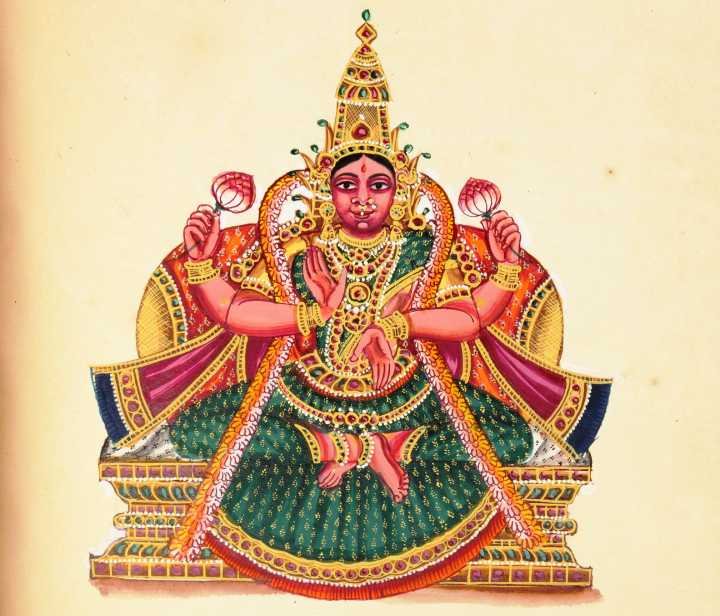
A profound way to worship Goddess Lakshmi (also spelt Laxmi) is through chanting and practice of the Mahalakshmi Mantra. Revered as Sri and Kamala, Goddess Mahalakshmi is regarded in the Hindu pantheon as the bestower of wealth, prosperity, and abundance.
Maa Lakshmi is the consort of Lord Vishnu and is one of the Tridevis alongside Goddess Parvati and Saraswati.
Besides the popular eight forms of this Goddess called Ashtalakshmi’s (Adi, Dhana, Dhanya, Gaja, Santana, Dhairya, Vijaya and Vidya Lakshmi forms), there are even several other forms such as Siddha Lakshmi, Jaya, Rajya Lakshmi and so on.
Coming to the Maha Lakshmi form, it is the greater form of Goddess Lakshmi. The link to this form can be traced back to the Vedas, where she is called by the name Shri. In Tantric tradition and among Mahavidyas, she is associated with the name Kamala.
Each of these divine forms has its own Mantras and Vidhis.
The Mahalakshmi Mantra below is a Saptavimshakshara Mantra (27-letter mantra) with highly potent beejas. It’s a powerful mantra for worship that bestows wealth, prosperity, abundance, and supernatural powers on devotees.
The mantra below includes the Viniyoga, Nyasa, and Dhyana Shloka of this Lakshmi Mantra.
Mahalakshmi Mantra – Saptavimshakshara Mantra
ॐ श्रीं ह्रीं श्रीं कमले कमलालये प्रसीद प्रसीद श्रीं ह्रीं श्रीं महालक्ष्म्यै नमः ॥
Oṃ Śrīṃ Hrīṃ Śrīṃ Kamale Kamalālaye Prasīda Prasīda Śrīṃ Hrīṃ Śrīṃ Mahālakṣmyai Namaḥ ॥
Om Shreem Hreem Shreem Kamale Kamalalaye Praseeda Praseeda Shreem Hreem Shreem Mahalakshmyai Namah ॥
Meaning: Om, chanting the Lakshmi beeja Shrim, which represents Prosperity, wealth, and abundance, and the Hrim beeja, which represents the divine energy of illusion, I invoke you, Goddess Kamala, the one who dwells in the Lotus; be pleased, be pleased with me. I convey my salutations to the Goddess Mahalakshmi.
Viniyoga and Nyasas of this Mantra
Viniyoga – विनियोगः
अस्य श्रीसप्तविंशत्यक्षर-महालक्ष्मी-मन्त्रस्य ब्रह्मा ऋषिः, गायत्री छन्दः, श्रीमहालक्ष्मीर्देवता, श्रीं बीजम्, नमः शक्तिः, सर्वेष्टसिद्धये जपे विनियोगः ॥
Asya Śrī-Saptaviṃśatyakṣara-Mahālakṣmī-Mantrasya Brahmā Ṛṣiḥ, Gāyatrī Chandaḥ, Śrīmahālakṣmīr Devatā, Śrīṃ Bījam, Namaḥ Śaktiḥ, Sarveṣṭasiddhaye Jape Viniyogaḥ ॥
Asya Shri Saptavimshatyakshara Mahalakshmi Mantrasya Brahma Rishih, Gayatri Chandah, Shri Mahalakshmir Devata, Shreem Beejam, Namah Shaktih, Sarveshta Siddhaye Jape Viniyogah ॥
Rishyadi Nyasa – ऋष्यादि न्यास
ब्रह्म ऋषये नमः शिरसि। गायत्री छन्दसे नमः मुखे। श्रीमहालक्ष्मी देवतायै नमः हृदि। श्रीं बीजाय नमः गुह्ये। नमः शक्तये नमः पादयोः। विनियोगाय नमः सर्वाङ्गे।
Ṛṣyādi Nyāsaḥ – Brahma Ṛṣaye Namaḥ Śirasi, Gāyatrī Chandase Namaḥ Mukhe, Śrīmahālakṣmī Devatāyai Namaḥ Hṛdi, Śrīṃ Bījāya Namaḥ Guhye, Namaḥ Śaktaye Namaḥ Pādayoḥ, Viniyogāya Namaḥ Sarvāṅge
Rishyadi Nyasah – Brahma Risdhaye Namah Shirasi, Gayatri Chandase Namah Mukhe, Shri Mahalakshmi Devatayai Namah Hrudi, Shreem Bijaya Namah Guhye, Namah Shaktaye Namah Padayoh, Viniyogaya Namah Sarvange
Karanyasa – करन्यासः
ॐ श्रीं ह्रीं श्रीं कमले श्रीं ह्रीं श्रीं अङ्गुष्ठाभ्यां नमः ॥
ॐ श्रीं ह्रीं श्रीं कमलालये श्रीं ह्रीं श्रीं तर्जनीभ्यां नमः ॥
ॐ श्रीं ह्रीं श्रीं प्रसीद श्रीं ह्रीं श्रीं मध्यमाभ्यां नमः ॥
ॐ श्रीं ह्रीं श्रीं प्रसीद श्रीं ह्रीं श्रीं अनामिकाभ्यां नमः ॥
ॐ श्रीं ह्रीं श्रीं महालक्ष्म्यै श्रीं ह्रीं श्रीं कनिष्ठिकाभ्यां नमः ॥
Oṃ Śrīṃ Hrīṃ Śrīṃ Kamale Śrīṃ Hrīṃ Śrīṃ Aṅguṣṭhābhyāṃ Namaḥ ॥
Oṃ Śrīṃ Hrīṃ Śrīṃ Kamalālaye Śrīṃ Hrīṃ Śrīṃ Tarjanībhyāṃ Namaḥ ॥
Oṃ Śrīṃ Hrīṃ Śrīṃ Prasīda Śrīṃ Hrīṃ Śrīṃ Madhyamābhyāṃ Namaḥ ॥
Oṃ Śrīṃ Hrīṃ Śrīṃ Prasīda Śrīṃ Hrīṃ Śrīṃ Anāmikābhyāṃ Namaḥ ॥
Oṃ Śrīṃ Hrīṃ Śrīṃ Mahālakṣmyai Śrīṃ Hrīṃ Śrīṃ Kaniṣṭhikābhyāṃ Namaḥ ॥
Om Shreem Hreem Shreem Kamale Shreem Hreem Shreem Angushthabhyam Namah ॥
Om Shreem Hreem Shreem Kamalalaye Shreem Hreem Shreem Tarjanibhyam Namah ॥
Om Shreem Hreem Shreem Praseeda Shreem Hreem Shreem Madhyamabhyam Namah ॥
Om Shreem Hreem Shreem Praseeda Shreem Hreem Shreem Anamikabhyam Namah ॥
Om Shreem Hreem Shreem Mahalakshmyai Shreem Hreem Shreem Kanishthikabhyam Namah ॥
Anganyasa – अङ्गन्यास
ॐ श्रीं ह्रीं श्रीं कमले श्रीं ह्रीं श्रीं हृदयाय नमः ॥
ॐ श्रीं ह्रीं श्रीं कमलालये श्रीं ह्रीं श्रीं शिरसे स्वाहा ॥
ॐ श्रीं ह्रीं श्रीं प्रसीद श्रीं ह्रीं श्रीं शिखायै वषट् ॥
ॐ श्रीं ह्रीं श्रीं प्रसीद श्रीं ह्रीं श्रीं कवचाय हुँ ॥
ॐ श्रीं ह्रीं श्रीं महालक्ष्म्यै श्रीं ह्रीं श्रीं अस्त्राय फट् ॥
Oṃ Śrīṃ Hrīṃ Śrīṃ Kamale Śrīṃ Hrīṃ Śrīṃ Hṛdayāya Namaḥ ॥
Oṃ Śrīṃ Hrīṃ Śrīṃ Kamalālaye Śrīṃ Hrīṃ Śrīṃ Śirase Svāhā ॥
Oṃ Śrīṃ Hrīṃ Śrīṃ Prasīda Śrīṃ Hrīṃ Śrīṃ Śikhāyai Vaṣaṭ ॥
Oṃ Śrīṃ Hrīṃ Śrīṃ Prasīda Śrīṃ Hrīṃ Śrīṃ Kavacāya Huṃ ॥
Oṃ Śrīṃ Hrīṃ Śrīṃ Mahālakṣmyai Śrīṃ Hrīṃ Śrīṃ Astrāya Phaṭ ॥
Om Shreem Hreem Shreem Kamale Shreem Hreem Shreem Hridayaya Namah ॥
Om Shreem Hreem Shreem Kamalalaye Shreem Hreem Shreem Shirase Svaha ॥
Om Shreem Hreem Shreem Praseeda Shreem Hreem Shreem Shikhayai Vashat ॥
Om Shreem Hreem Shreem Praseeda Shreem Hreem Shreem Kavachaya Hum ॥
Om Shreem Hreem Shreem Mahalakshmyai Shreem Hreem Shreem Astraya Phat ॥
Note: There is no separate Netra Nyasa – Nyasa of Eye for this Mantra
Dhyana Shloka to be Recited before Starting Maha Lakshmi Mantra Japa
ॐ सिन्दूरारुणकान्तिमब्ज वसतिं सौन्दर्यवारां निधिं ।
कोटीराङ्गदहार-कुण्डल कटीसूत्रादिभिर्भूषिताम् ॥
हस्ताब्जैर्वसुपात्रमब्जयुगलादर्शौ वहन्तीं परामावीतां ।
परिचारिकाभिरनिशं ध्यायेत् प्रियां शार्ङ्गिणः ॥
Oṃ Sindūrāruṇakāntim Abjavasatiṃ Saundaryavārāṃ Nidhiṃ ।
Koṭīrāṅgadhāra-Kuṇḍala Kaṭīsūtrādibhir Bhūṣitām ॥
Hastābjair Vasupātram Abjayugalādarśau Vahantīṃ Parāmāvītāṃ ।
Paricārikābhir Aniśaṃ Dhyāyet Priyāṃ Śārṅgiṇaḥ ॥
Om Sinduraarunakantim Abjavasatim Saundaryavaram Nidhim ।
Koteerangadahara Kundala Katisutradibhir Bhushitam ॥
Hastabjair Vasupatram Abjayugaladarshau Vahantim Paramavitam ।
Paricharikabhir Anisham Dhyayet Priyam Sharnginah ॥
Yantra Worship, Puja, and Japa Details
For Mantra siddhi, one should perform Yantra Puja by worshipping the Maha Lakshmi Yantra. This Yantra consists of a shatkona (six-pointed star structure), Ashtadala padma (eight-petalled lotus) and a Bhupura (enclosing outer boundary).
After performing the Pitha puja, the practitioner worships the yantra and invokes Devi Sri MahaLakshmi; they must also perform the Avarana puja for all deities associated with the Yantra.
After yantra avarana worship, offer Dhupa, Dipa, and Nirajana and proceed with Mantra Japa and related ritual procedures.
The Mantra Japa process includes reciting viniyoga, performing the nyasas, visualising the Devi, contemplating on the meaning of the Dhyana shloka, and then chanting the Mantra.
Japa Sankhya of the Mahalakshmi Mantra is one lakh (1000,000 – 0.1 million) repetitions.
Ritualistic Procedures after Completing the Mantra Japa
Upon completing the entire Japa repetitions, the Sadhaka or practitioner should perform a Dasamsa homa with 10,000 offerings. The offerings are to be made using materials that are associated with prosperity and wealth, such as Bilva fruits, Coconut, Trimadhu, and Sesame.
The choice of Goma ingredients may differ as per the Sankalpa or the wish of the practitioner, or according to Guru’s advice.
For example, Homa with ingredients Durva, Gidici, and Ghee is believed to bring longevity to the devotee. Food cooked with ghee as an ingredient bestows authority or benefits from the kings.
This ritual is to be followed by Yantrarchana with water in a Kalasa. Additional rituals or practices can be performed as per the guidance of the Guru.