Rama Shlokas are the sacred verses that explain the glory and the divine nature of Lord Sri Rama. Some of these Shlokas, such as the Apadamapahartaram and Sri Rama Rama Rameti, are highly popular and are chanted daily in several households.
The simple lyrics and the rich meaning of the Rama Shlokas have made them wisely recited at the start of any work, spiritual discourses, rituals, and daily prayers.
Regular recitation of these shlokas purifies the mind, provides protection, removes obstacles, and cultivates the ability to abide by righteousness. Many devotees often use these hymns alongside Rama Mantras in their spiritual practices.
Let’s have a look at the popular Rama Shloka lyrics and their meanings.
Rama Shlokas – Lyrics and Meaning
ॐ आपदामपहर्तारम् दाताराम् सर्वसम्पदाम्।
लोकाभिरामम् श्रीरामम् भूयो-भूयो नमाम्यहम्॥
Oṃ Āpadām-Apaharṭāraṃ Dātāraṃ Sarva-Sampadām।
Lokābhirāmaṃ Śrīrāmaṃ Bhūyo-Bhūyo Namāmyaham॥
I bow to Lord Sri Rama again and again, the one who removes all the calamities and the bestower of all the prosperities and the one who delights all the worlds.
श्री राम राम रामेति रमे रामे मनोरमे।
सहस्रनाम तत् तुल्यं रामनाम वरानने॥
Śrī Rāma Rāma Rāmeti Rame Rāme Manorame।
Sahasranāma Tat Tulyam Rāma-Nāma Varānane॥
O the Devi with a beautiful face (referring to Goddess Parvati), uttering the word Rama and its repetition like Rama Rama delights me (Lord Shiva). Even the thousand names (of Lord Vishnu) are equal to the name Rama.
अयोध्या नगरे रत्न चित्र सौवर्ण मण्डपे
मन्दारपुष्पैराबद्ध विताने तोरणान्विते।
सिंहासने समासीनं पुष्टकोपरि राघवम्
राक्षोभिर्हरिभिर्देवै स्सुविनमागतै शुभैः॥
Ayodhyā Nagare Ratna Citra Sauvarṇa Maṇḍape
Mandāra-Puṣpair-Ābaddha Vitāne Toraṇānvite।
Siṁhāsane Samāsīnaṁ Puṣṭakopari Rāghavam
Rākṣobhir Haribhir Devai Ssu-Vinamāgatai Śubhaiḥ॥
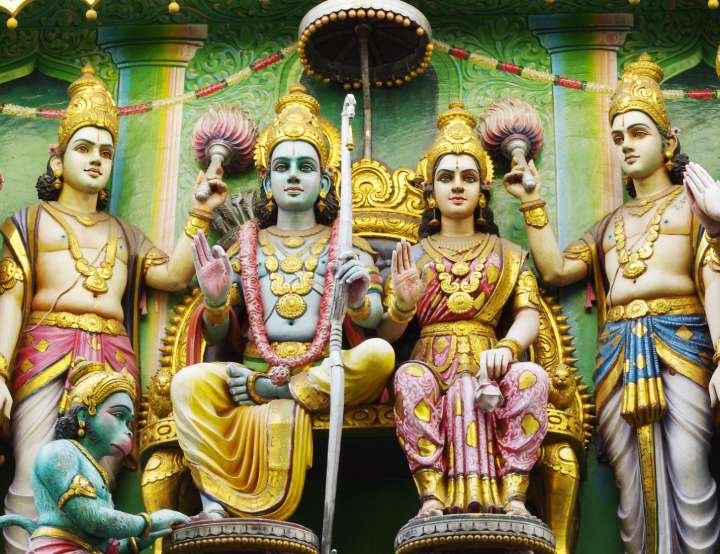
In the city of Ayodhya, in a golden pavilion studded with gemstones and rich with paintings
Where a canopy is decorated with Mandara flowers, and with great ceremonial archways
Lord Raghava (Rama) is seated upon a throne, upon a cushioned seat
Surrounded by Rakshasas, Vanaras and Devas, who came with great humility and being auspicious.