Among the many scared Ganesha Slokas, Agajanana Padmarkam holds a unique place for its gentle yet in-depth lyrics and profound devotional meaning.
It is one of the common prayers recited in daily worship in every household, during rituals, and is almost common in school prayers in India, besides the Shukhlam Baradharam Vishnum Sloka.
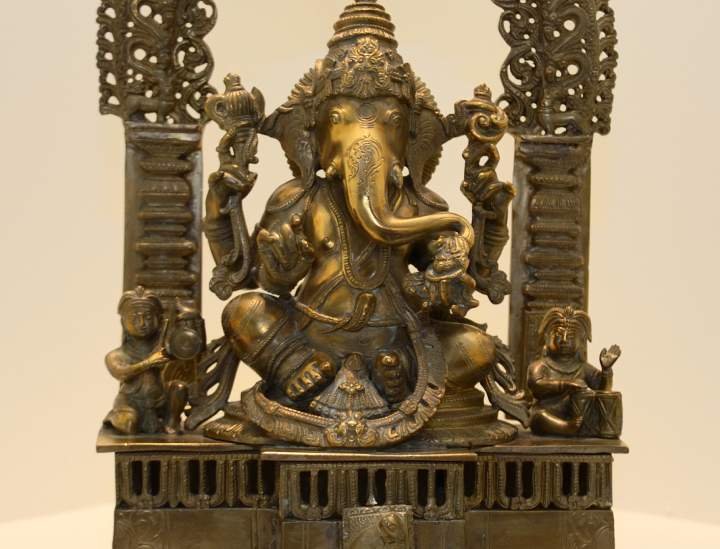
The Agajanana Padmarkam lyrics present a different portrait of Lord Ganesha, depicting his love for his mother, Goddess Parvati. It also explains the compassionate nature of lord Ganesha alongside the appearance, as an elephant-headed and single-tusked Lord.
The soothing, poetic lyrics of this devotion hymn, along with its in-depth meaning, make it a great chant for meditating and experiencing a deeper spiritual consciousness.
Chanting this Sloka daily removes the obstacles in our path and guide us to connect with Lord Ganesh.
Agajanana Padmarkam Lyrics and Meaning
अगजानन पद्मार्कं गजाननमहर्निशम् ।
अनेकदतं भक्तानां एकदन्तं उपास्महे ॥
Agajānana Padmārkaṃ Gajānanamaharniśam ।
Anekadamtaṃ Bhaktānāṃ Ekadantaṃ Upāsmahe ॥
Meaning: O Lord Ganesha, the elephant-faced Lord (Gajanana), the one who gets illuminated with the radiance of the sun upon seeing the lotus face of the daughter of the Mountains (Goddess Parvati)
The bestower of multiple boons. O Lord Ekadanta, the one with a single tusk, I worship you with devotion.
Word-by-Word Meaning of this Ganesha Sloka
- Aga – Mountain
- Janaja – Daughter of
- Padma – Lotus
- Arkam – Radiance, Sun
- Gajanana – Elephant faced one
- Aharnisam – Day and Night (All the time)
- Aneka – Multiple
- Damtam – Granting
- Bhaktanaam – For the devotees
- Eka dantam – Single tusked
- Upasmahe – I meditate and worship